Students' Mathematical Conceptual Understanding Through a Deep Learning Approach
DOI:
https://doi.org/10.35706/sjme.v10i2.13155Keywords:
Deep Learning, Mathematical Conceptual Understanding , Mathematics LearningAbstract
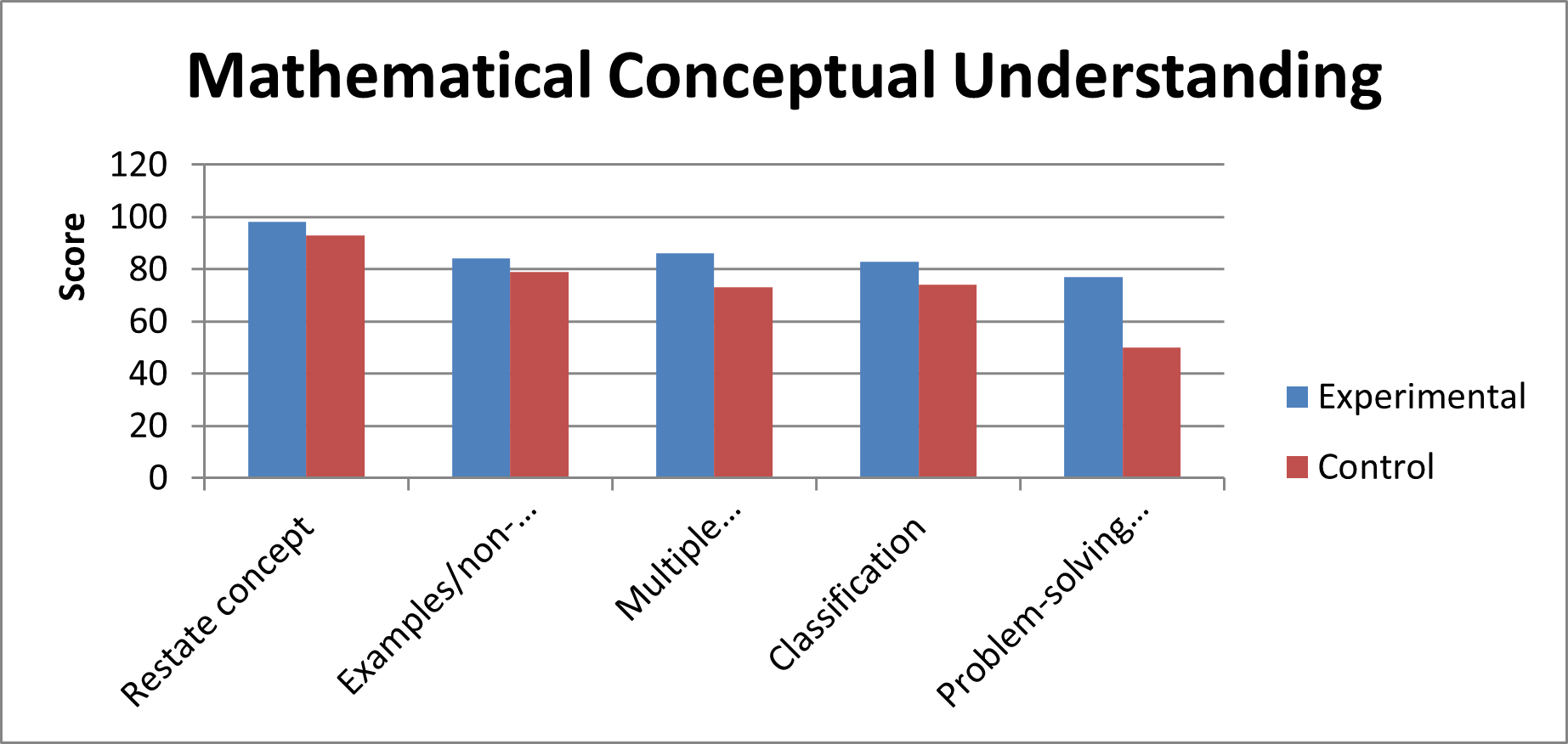
This study investigated whether a pedagogical Deep Learning approach integrating meaningful, mindful, and joyful learning could strengthen eighth-grade students’ mathematical conceptual understanding. The study employed a quantitative quasi-experimental method with a randomized control-group-only design. The participants were 62 eighth-grade students at MTsN 6 Lima Puluh Kota during the 2024/2025 academic year. Class VIII.6, consisting of 31 students, was assigned as the experimental group and received instruction through the Deep Learning approach, whereas class VIII.4, also consisting of 31 students, served as the control group and received instruction through the scientific approach. Data were collected using a five-item essay test covering the abilities to restate concepts, provide examples and non-examples, represent concepts in multiple mathematical forms, classify objects according to conceptual characteristics, and apply concepts or procedures in problem-solving. The instrument was reviewed by three mathematics teachers and demonstrated high internal consistency, with a Cronbach’s alpha coefficient of 0.84. Descriptive analysis showed that the experimental group achieved a higher mean posttest score than the control group, with scores of 85.60 and 73.80, respectively. The experimental group also outperformed the control group across all conceptual-understanding indicators. The largest difference occurred in applying concepts or procedures to solve problems, with mean scores of 77 and 50, respectively. The independent-samples t-test yielded a value of 3.801, indicating stronger mathematical conceptual understanding among students taught through the Deep Learning approach. These findings suggest that learning experiences emphasizing conceptual connections, reflection, active engagement, and authentic problem-solving can support students in developing deeper and more transferable mathematical understanding. Nevertheless, the findings should be interpreted within the context of a single school, two intact classes, a relatively short intervention, and a posttest-only design.
Downloads
References
Achmad, W., Faiq, A., & Wijayanti, P. (2024). Analisis Kemampuan Pemecahan Masalah Matematika pada Soal PISA Ditinjau dari Minat Siswa SMP terhadap Matematika Analysis of Mathematical Problem Solving Ability on PISA Questions in Terms of Junior High School Students' Interest in Mathematics. 5(2), 66–78.
Andriani, S., & Septiani, I. (2020). ETNOMATEMATIKA MOTIF CEPLOKAN BATIK YOGYAKARTA DALAM PENINGKATAN PEMAHAMAN KONSEP MATEMATIKA SISWA. Delta: Jurnal Ilmiah Pendidikan Matematika. https://doi.org/10.31941/delta.v8i1.966
Annisah, S., Suhendi, S., Supriatin, A., & Masfi’ah, S. (2021). Penurunan Kemampuan Pemahaman Konsep Matematis Siswa Sekolah Dasar Selama Pembelajaran Online di Masa Pandemic Covid-19. Elementary: Jurnal Ilmiah Pendidikan Dasar. https://doi.org/10.32332/ejipd.v7i2.3745
Asnawati, S. (2024). REPRESENTASI MATEMATIS SEBAGAI MEDIATOR. Euclid, 13(1), 39–46.
Bhakti, C. P., Ghiffari, M. A. N., & Salsabil, K. (2019). Joyful Learning: Alternative Learning Models to Improving Student’s Happiness. Jurnal VARIDIKA. https://doi.org/10.23917/varidika.v30i2.7572
Dewi, I., Hasratuddin, Andriani, A., & Siregar, N. (2025). Perancangan Pembelajaran Matematika Menggunakan Pendekatan Deep Learning. Jurnal Fibonaci: Jurnal Pendidikan Matematika, 106–115.
Dewi, I. L. K., Rosita, C. D., & Bakar, M. T. (2026). PEMAHAMAN KONSEP MATEMATIS : DARI KOGNISI INDIVIDUAL MENUJU PRAKTIK EPISTEMIK – DISKURSIF. Euclid, 13(1), 18–26.
Diputera, A. M., Eza, G. N., Guru, P., Anak, P., Dini, U., Pendidikan, F. I., Medan, U. N., Kebidanan, A., & Husada, M. (2024). Memahami Konsep Pendekatan Deep Learning dalam Pembelajaran Anak Usia Dini Yang Meaningful, Mindful dan Joyful : Kajian Melalui Filsafat Pendidikan. 10(2), 108–120.
Djafar, S. M. J., Mukadam, A., Limpudong, R., Laurestabo, R., & Makwan, G. (2023). The Role of Mathematics Education in Improving Problem Solving Abilities in the Era of Industrial Revolution 4.0. Edutechnium Journal of Educational Technology, 2(1), 17–24. https://doi.org/10.71365/edujet.v2i1.39
Febindayanti, A., & Sinaga, B. (2024). Analisis Pemahaman Konsep Matematika Siswa Dalam Penerapan Pembelajaran Berbasis Konstruktivisme. Indonesian Journal of Education and Learning. https://doi.org/10.31002/ijel.v8i1.2073
Fletcher, T., & Ní Chróinín, D. (2022). Pedagogical principles that support the prioritisation of meaningful experiences in physical education: conceptual and practical considerations. Physical Education and Sport Pedagogy. https://doi.org/10.1080/17408989.2021.1884672
Ghasemi, A., & Zahediasl, S. (2012). Normality tests for statistical analysis: A guide for non-statisticians. International Journal of Endocrinology and Metabolism, 10(2), 486–489. https://doi.org/10.5812/ijem.3505
Gianto, G., Wiryanto, W., Mariana, N., & Umah, U. (2026). Enhancing Learning through Deep Learning: Does It Foster Elementary Students' Conceptual Understanding and Motivation in Mathematics? Jurnal Matematika dan Pendidikan Matematika, 11(1), 23–35.
Khoerunnisa, R., & Maryati, I. (2022). Kemampuan Representasi Matematis Siswa SMP terhadap Materi Segiempat. Plusminus: Jurnal Pendidikan Matematika. https://doi.org/10.31980/plusminus.v2i1.1583
Kim, T. K. (2015). T test as a parametric statistic. Korean Journal of Anesthesiology, 68(6), 540–546. https://doi.org/10.4097/kjae.2015.68.6.540
Kim, Y., & Steiner, P. M. (2016). Quasi-experimental designs for causal inference. Educational Psychologist, 51(3–4), 395–405. https://doi.org/10.1080/00461520.2016.1207177
Marliani, S., & Puspitasari, N. (2022). Kemampuan representasi matematis siswa pada materi kesebangunan dan kekongruenan di kampung sukawening. Jurnal Inovasi Pembelajaran Matematika: PowerMathEdu. https://doi.org/10.31980/powermathedu.v1i2.2224
Nurul Mutmainnah, Adrias, & Aissy Putri Zulkarnaini. (2021). Implementasi Pendekatan Deep Learning Terhadap Pembelajaran Matematika Di Sekolah. Jurnal Ilmiah Pendidikan Dasar, 10(1), 858–871.
Oktavia, T., & Yulia, P. (2025). Analisis kemampuan pemahaman konsep matematis siswa berdasarkan tipe kepribadian thinking dan feeling dalam menyelesaikan soal aljabar. JPMI (Jurnal Pembelajaran Matematika Inovatif), 8(1), 13–28. https://doi.org/10.22460/jpmi.v8i1.25678
Pambudi, G. D., Winangsih, F., Nunaki, J. H., Nusantari, E., & Damopolii, I. (2022). Encouraging students’ metacognitive skills through inquiry learning. Inornatus: Biology Education Journal. https://doi.org/10.30862/inornatus.v2i1.272
Putri, S. M., & Susanto, A. (2023). Pemahaman Konsep Siswa Menggunakan Model Pembelajaran Problem Based Learning (PBL) Berbantuan Aplikasi Geogebra. Lattice Journal: Journal of Mathematics Education and Applied. https://doi.org/10.30983/lattice.v3i2.7490
Qoyyimah, A., & Maswar, M. (2025). The effectiveness of applying mathemagic as an alternative method of Joyful learning for junior high school students. Alifmatika: Jurnal Pendidikan dan Pembelajaran Matematika, 7(1), 53–67. https://doi.org/10.35316/alifmatika.2025.v7i1.53-67
Ročāne, M., & Samuseviča, A. (2023). DEVELOPING A CULTURE OF MINDFUL LEARNING: CHALLENGES, BENEFITS, AND OPPORTUNITIES. SOCIETY. INTEGRATION. EDUCATION. Proceedings of the International Scientific Conference. https://doi.org/10.17770/sie2023vol1.7111
Salong, A., & Ansiska, P. (2025). Integrating Mindful, Meaningful, and Joyful Learning to Enhance Student Engagement and Learning Outcomes in Economic Education. 17, 4543–4557. https://doi.org/10.35445/alishlah.v17i3.7484
Santosa, Y. T., Kholid, M. N., Ishartono, N., Fitriyya, M., & Junaedi, I. (2025). Toward a Theoretical Model of Deep Mathematical Thinking: Integrating Deep Learning and Mathematical Reasoning Frameworks. Journal of Deep Learning. https://doi.org/10.23917/jdl.v1i2.11142
Sardin, S., Ugi, L. E., & Harsi, R. A. (2022). Pengaruh Media Kartu Dalam Model Pembelajaran Joyful Learning Untuk Mengembangkan pemahaman Konsep Siswa Materi Pecahan Kelas V SDN 1 MASIRI. Indonesian Journal of Educational Science (IJES). https://doi.org/10.31605/ijes.v4i2.1329
Sitompul, I., Juana, N. A., Sitompul, N. H., & Raya, U. T. (2025). Penerapan Model Deep Learning untuk Meningkatkan Kemampuan Konseptual Siswa dalam Pembelajaran Matematika Siswa Kelas V SDN 014628 Application of Deep Learning Model to Improve Students' Conceptual Ability in Mathematics Learning for Grade V Students. Edu Society: Jurnal Pendidikan, Ilmu Sosial, dan Pengabdian Kepada Masyarakat, 5(2), 1287–1293.
Slamet, S., Hendriana, B., & Supiat. (2025). Mengungkap Perspektif Siswa: Peran Deep Learning dalam Visualisasi Konsep dan Pemecahan Masalah Matematika. International Journal of Progressive Mathematics Education. https://doi.org/10.22236/ijopme.v5i1.19310
Tavakol, M., & Dennick, R. (2011). Making sense of Cronbach’s alpha. International Journal of Medical Education, 2, 53–55. https://doi.org/10.5116/ijme.4dfb.8dfd
Umami, R. R., Utaminingsih, S., & Riswari, L. A. (2024). Efektivitas Pendekatan Realistic Mathematics Education Berbantuan Media ARCA Terhadap Pemahaman Konsep Matematika Siswa Kelas V SD. Jurnal Ilmiah Profesi Pendidikan, 9(1), 325–333. https://doi.org/10.29303/jipp.v9i1.2057
Vargas-Hernández, J. G., & Vargas-González, O. C. (2022). Strategies for meaningful learning in higher education. Journal of Research in Instructional. https://doi.org/10.30862/jri.v2i1.41
Wang, Q., Zhang, Y., Zhang, Y., & Chen, T. (2023). The Impact of Mindful Learning on Subjective and Psychological Well-Being in Postgraduate Students. Behavioral Sciences. https://doi.org/10.3390/bs13121009
Yuliana, H., Supriatin, A., & Rizal, S. U. (2025). Pengaruh Model Joyful Learning Untuk Meningkatkan Kreativitas Belajar Matematika Materi Bangun Datar di Madrasah Ibtidaiyah. Didaktika: Jurnal Kependidikan, 14(2), 2449–2458.
Yusoff, M. S. B. (2019). ABC of content validation and content validity index calculation. Education in Medicine Journal, 11(2), 49–54. https://doi.org/10.21315/eimj2019.11.2.6
Downloads
Published
How to Cite
Issue
Section
Citation Check
License
Copyright (c) 2026 Yulia, Fitri Wahyuningsih, Fitria Mardika

This work is licensed under a Creative Commons Attribution-ShareAlike 4.0 International License.
Authors who publish with this journal agree to the following terms:
- Authors retain copyright and grant the journal right of first publication with the work simultaneously licensed under a Creative Commons Attribution License that allows others to share the work with an acknowledgment of the work's authorship and initial publication in this journal.
- Authors are able to enter into separate, additional contractual arrangements for the non-exclusive distribution of the journal's published version of the work (e.g., post it to an institutional repository or publish it in a book), with an acknowledgment of its initial publication in this journal.
- Authors are permitted and encouraged to post their work online (e.g., in institutional repositories or on their website) prior to and during the submission process, as it can lead to productive exchanges, as well as earlier and greater citation of published work (See The Effect of Open Access).