Artificial Intelligence in Mathematics Education A Systematic Review of Students’ Mathematical Problem-Solving and Self-Directed Learning
DOI:
https://doi.org/10.35706/sjme.v10i2.13331Keywords:
Mathematics education, Mathematical problem solving, learning autonomy, Systematic Literature review, Artificial IntelligenceAbstract
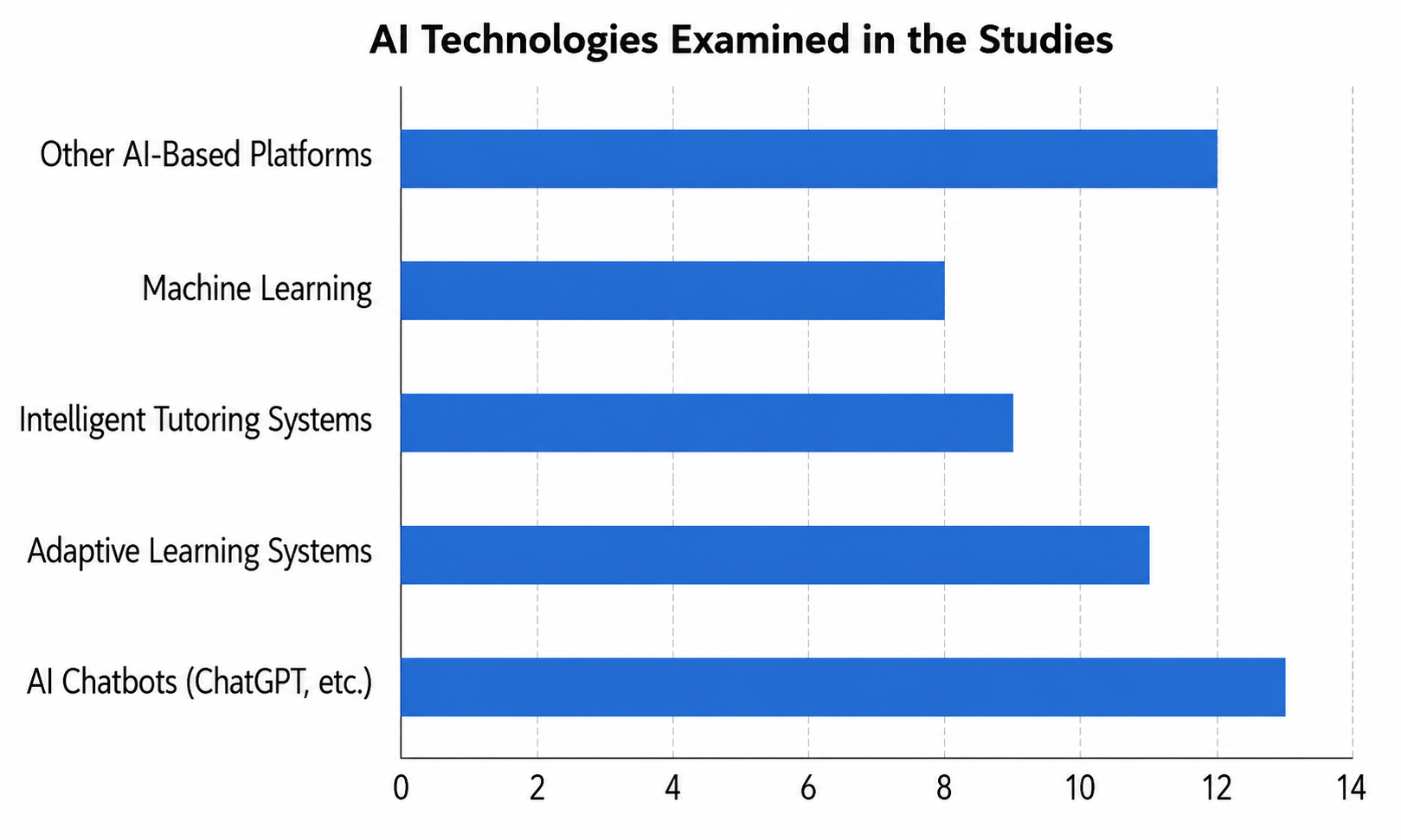
Artificial Intelligence (AI) is increasingly integrated into mathematics education to support personalized, adaptive, and student-centered learning. However, evidence concerning its simultaneous contribution to students’ mathematical problem-solving skills and self-directed learning remains fragmented. This study aimed to systematically analyze publication trends, forms of AI implementation, contributions to mathematical problem solving and self-directed learning, and research gaps in AI-supported mathematics education. A Systematic Literature Review was conducted following the PRISMA 2020 guidelines. Relevant journal articles published between 2021 and 2025 were retrieved from Scopus, OpenAlex, and Google Scholar using predefined search strings. Studies were selected using the PICOC framework and evaluated through quality assessment based on methodological clarity, the explicit description of AI technologies, and their relevance to the research questions. Of 121 initially identified records, 53 eligible open-access articles were included and analyzed thematically. The findings revealed a substantial increase in publications, from one article in 2021 to 25 articles in 2025. AI chatbots were the most frequently examined technology, followed by other AI-based platforms, adaptive learning systems, intelligent tutoring systems, and machine-learning applications. AI supported mathematical problem solving by providing scaffolding, immediate feedback, strategy guidance, and systematic visualization of solution processes. It also promoted self-directed learning through personalized pathways, flexible access, adaptive feedback, learning-pace regulation, and increased confidence. Nevertheless, only a limited number of studies examined both outcomes simultaneously. Significant challenges included teachers’ insufficient digital literacy, unequal access, additional instructional workload, students’ overreliance on AI, data-privacy concerns, and algorithmic hallucinations. Future research should develop empirically validated pedagogical models, conduct meta-analyses, and establish ethical guidelines to ensure that AI functions as a safe, inclusive, and sustainable cognitive facilitator in mathematics learning.
Downloads
References
Almarashdi, H. S., Jarrah, A. M., Abu Khurma, O., & Gningue, S. M. (2024). Unveiling the potential: A systematic review of ChatGPT in transforming mathematics teaching and learning. Eurasia Journal of Mathematics, Science and Technology Education, 20(12).
Anjos, J. R. dos, Souza, M. G. de, Prodanov, T. S., & Neto, A. S. de A. (2024). Disruptive Education: Integrating ChatGPT into an Active Methodology for Teaching Sciences and Mathematics. ACTA SCIENTIAE, 26(1), 334–369.
Awang, L. A., Yusop, F. D., & Danaee, M. (2025). Current practices and future direction of artificial intelligence in mathematics education: A systematic review. International Electronic Journal of Mathematics Education, 20(2). https://doi.org/10.29333/iejme/16006
Badri, F. (2024). Pemanfaatan Artificial Intellegence dalam Pembelajaran Matematika [Utilization of Artificial Intelligence in Mathematics Learning]. Galois: Jurnal Penelitian Pendidikan Matematika, 3(2), 52–59. https://doi.org/10.18860/gjppm.v3i2.12319
Buton, Y. L., Liarian, B. F., Teti, R. A., Dhato, M. F., & Sewo, F. M. (2025). Penerapan Pembelajaran Matematika Berbasis IT Dengan Gpt AI Sebagai Alat Bantu. Al-Irsyad Journal of Mathematics Education, 4(2), 307–316. https://doi.org/10.58917/ijme.v4i2.256
Capinding, A. T. (2023). Revolutionizing Pre-Calculus Education: Photomath’s Ai-Powered Mathematics Tutorship. Problems of Education in the 21st Century, 81(6), 758–775. https://doi.org/10.33225/pec/23.81.758
Chau, D. B., Luong, V. T., Long, T. T., & Linh, N. T. T. (2025). Personalized Mathematics Teaching with The Support of AI Chatbots to Improve Mathematical Problem-Solving Competence for High School Students in Vietnam. European Journal of Educational Research, 14(1), 323–333. https://doi.org/10.12973/eu-jer.14.1.323
Cunska, A. (2022). Prototype of Project AI4Math: Interdisciplinary and Innovative Technology for Accelerated Learning of Mathematics. WSEAS Transaction on Business and Economics, 19(WSEAS Transactions on Business and Economics, ISSN / E-ISSN: 1109-9526 / 2224-2899, Volume 19, 2022, Art. #165), 1839–1848. https://doi.org/10.37394/23207.2022.19.165
Dabingaya, M. (2022). Analyzing the Effectiveness of AI-Powered Adaptive Learning Platforms in Mathematics Education. Interdisciplinary Journal Papier Human Review, 3(1), 1–7. https://doi.org/10.47667/ijphr.v3i1.226
Devi, N. C., Nurhidayati, S., Sugiman, & Purwoko, R. Y. (2025). Analisis Kebutuhan Guru Dalam Menggunakan AI Sebagai Pendukung Media Pembelajaran Matematika Tingkat MA. Jurnal PEKA (Pendidikan Matematika), 9(1), 20–31. https://doi.org/10.37150/jp.v8i2.3461
Dinta, A., Luthfi, A., & Wahyuni, M. (2023). Media Pembelajaran Matematika Berbasis Chatbot untuk Kemampuan Pemahaman Konsep Pola Bilangan Siswa [Chatbot Based Mathematics Learning Media for Students' Understanding Ability of Number Pattern Concepts]. Journal of Education Research, 4(4), 2385–2392. https://doi.org/10.37985/jer.v4i4.633
Efendi, Moh. A., Panglipur, I. R., & Murtinasari, F. (2024). Identifying the use of artificial intelligence in math learning based on learning outcomes. At- Ta’lim : Jurnal Pendidikan, 10(2), 53–59. https://doi.org/10.55210/attalim.v10i2.1689
Getenet, S. (2024). Pre-service teachers and ChatGPT in multistrategy problem-solving: Implications for mathematics teaching in primary schools. International Electronic Journal of Mathematics Education, 19(1). https://doi.org/10.29333/iejme/14141
Göktepe Yıldız, S., & Göktepe Körpeoğlu, S. (2025). Trends and insights of AI in mathematics education: A bibliometric analysis. International Electronic Journal of Mathematics Education, 20(3). https://doi.org/10.29333/iejme/16401
Haddaway, N. R., Page, M. J., Pritchard, C. C., & McGuinness, L. A. (2022). PRISMA2020 : An R package and Shiny app for producing PRISMA 2020‐compliant flow diagrams, with interactivity for optimised digital transparency and Open Synthesis. Campbell Systematic Reviews, 18(2). https://doi.org/10.1002/cl2.1230
Hanan, H., & Sugiman, S. (2025). Dampak Artificial Intelligence terhadap Belief Peserta Didik dalam Pembelajaran Matematika. Jurnal Cendekia : Jurnal Pendidikan Matematika, 9(1), 339–361. https://doi.org/10.31004/cendekia.v9i1.3852
Han, J. Y., Burm, E., & Chun, Y.-E. (2024). Applying Artificial Intelligence-Based Adaptive Learning on Mathematical Attitudes and Self-Directed Learning. Nanotechnology Perceptions, 20(S3), 408–424. https://doi.org/10.62441/nano-ntp.v20iS3.30
Hardika Saputra. (2025). Pemanfaatan Chatbots dalam Pembelajaran Matematika di Sekolah Dasar: Pengaruh terhadap Pemahaman dan Kemandirian Belajar [The Utilization of Chatbots in Elementary School Mathematics Learning: The Influence on Conceptual Understanding and Mathematical Learning Independence]. Pentagon : Jurnal Matematika Dan Ilmu Pengetahuan Alam, 3(1), 80–98. https://doi.org/10.62383/pentagon.v3i1.410
Hossein-Mohand, H., Hossein-Mohand, H., Albanese, V., & Olmos Gómez, M. del C. (2025). AI in mathematics education: A bibliometric analysis of global trends and collaborations (2020-2024). Eurasia Journal of Mathematics, Science and Technology Education, 21(2). https://doi.org/10.29333/ejmste/15915
Hwang, G.-J., & Tu, Y.-F. (2021). Roles and Research Trends of Artificial Intelligence in Mathematics Education: A Bibliometric Mapping Analysis and Systematic Review. Mathematics, 9(6), 584. https://doi.org/10.3390/math9060584
Kohnke, S., & Zaugg, T. (2025). Artificial Intelligence: An Untapped Opportunity for Equity and Access in STEM Education. Education Sciences, 15(1), 68. https://doi.org/10.3390/educsci15010068
Korkmaz Guler, N., Dertli, Z. G., Boran, E., & Yildiz, B. (2024). An artificial intelligence application in mathematics education: Evaluating ChatGPT’s academic achievement in a mathematics exam. Pedagogical Research, 9(2). https://doi.org/10.29333/pr/14145
Kulkarni, R., Choudhari, G., Bhavik, M., Bura, R., & Bhosale, V. (2025). Gamifying Early Math Education: An Innovative AI Game for Children. Journal of Information Technology Education: Innovations in Practice, 24. https://doi.org/10.28945/5595
Kuzmenko, M. V. (2025). Artificial intelligence in school mathematics education: awareness, readiness, and usage among mathematics teachers. Psychological Science and Education, 30(3), 125–139. https://doi.org/10.17759/pse.2025300310
Lame, G. (2019). Systematic Literature Reviews: An Introduction. Proceedings of the Design Society: International Conference on Engineering Design, 1(1), 1633–1642. https://doi.org/10.1017/dsi.2019.169
Martínez-Zarzuelo, A., Nolla, Á., Recio, T., Tolmos, P., Ariño-Morera, B., & Gallardo, A. (2025). An Experience with Pre-Service Teachers, Using GeoGebra Discovery Automated Reasoning Tools for Outdoor Mathematics. Education Sciences, 15(6), 782. https://doi.org/10.3390/educsci15060782
Mohamed, M. Z. bin, Hidayat, R., Suhaizi, N. N. binti, Sabri, N. binti M., Mahmud, M. K. H. bin, & Baharuddin, S. N. binti. (2022). Artificial intelligence in mathematics education: A systematic literature review. International Electronic Journal of Mathematics Education, 17(3). https://doi.org/10.29333/iejme/12132
Ngoveni, M. A. (2025). Revolutionizing Mathematics Education: Artificial Intelligence Integration, Ethics, and Access in Open Distance e-Learning. Eurasian Journal of Educational Research, 115, 38–52.
Niño-Rojas, F., Lancheros-Cuesta, D., Jiménez-Valderrama, M. T. P., Mestre, G., & Gómez, S. (2023). Systematic Review: Trends in Intelligent Tutoring Systems in Mathematics Teaching and Learning. International Journal of Education in Mathematics, Science and Technology, 12(1), 203–229. https://doi.org/10.46328/ijemst.3189
Opesemowo, O. A. G., & Adewuyi, H. O. (2024). A systematic review of artificial intelligence in mathematics education: The emergence of 4IR. Eurasia Journal of Mathematics, Science and Technology Education, 20(7). https://doi.org/10.29333/ejmste/14762
Panic, N., Leoncini, E., de Belvis, G., Ricciardi, W., & Boccia, S. (2013). Evaluation of the Endorsement of the Preferred Reporting Items for Systematic Reviews and Meta-Analysis (PRISMA) Statement on the Quality of Published Systematic Review and Meta-Analyses. PLoS ONE, 8(12). https://doi.org/10.1371/journal.pone.0083138
Rahmanita Zakaria. (2024). AI in English and Math Education: Bridging the Gap Between Theory and Practice. Communications on Applied Nonlinear Analysis, 31(6s), 01–13. https://doi.org/10.52783/cana.v31.1101
Rizos, I., Foykas, E., & Georgakopoulos, S. V. (2024). Enhancing mathematics education for students with special educational needs through generative AI: A case study in Greece. Contemporary Educational Technology, 16(4). https://doi.org/10.30935/cedtech/15487
Rusdial Marta, Fadhilaturrahmi, F., & Zulfah. (2025). Artificial Intelligence (AI) dalam Pembelajaran Matematika: Kajian Bibliometrik [Artificial Intelligence (AI) in Mathematics Learning: A Bibliometric Study]. Jurnal Pengabdian Masyarakat Dan Riset Pendidikan, 3(4), 3236–3245. https://doi.org/10.31004/jerkin.v3i4.1044
Sánchez-Ruiz, L. M., Moll-López, S., Nuñez-Pérez, A., Moraño-Fernández, J. A., & Vega-Fleitas, E. (2023). ChatGPT Challenges Blended Learning Methodologies in Engineering Education: A Case Study in Mathematics. Applied Sciences, 13(10), 6039. https://doi.org/10.3390/app13106039
Sari, F., & Mahmud, S. F. (2024). Implementasi Metode Preference Selection Index Dalam Memilih Media Pembelajaran Matematika Barbasis Artificial Intelligence [Implementation of the Preference Selection Index Method in Selecting Artificial Intelligence Based Mathematics Learning Media]. JURNAL UNITEK, 17(1), 141–151. https://doi.org/10.52072/unitek.v17i1.869
Seto, S. B., Kade, G., Lestari, M. I., Sene, M. T., Muga, K. V., & Tenggong, Y. (2025). Pengaruh Penggunaan Aplikasi Mathos Ai Dalam Meningkatkan Kemampuan Pemecahan Masalah Matematika Siswa Kelas X Sman 1 Nangapanda. De Fermat : Jurnal Pendidikan Matematika, 8(1), 214–222. https://doi.org/10.36277/defermat.v8i1.2289
Soesanto, R. H., Dirgantoro, K. P. S., & Priyanti, N. (2022). Indonesian students’ perceptions towards AI-based learning in mathematics. Journal on Mathematics Education, 13(3), 531–548. https://doi.org/10.22342/jme.v13i3.pp531-548
Song, X., Mak, J., & Chen, H. (2025). Teachers and Learners’ Perceptions about Implementation of AI Tools in Elementary Mathematics Classes. Sage Open, 15(2). https://doi.org/10.1177/21582440251334545
Spreitzer, C., Straser, O., Zehetmeier, S., & Maaß, K. (2024). Mathematical Modelling Abilities of Artificial Intelligence Tools: The Case of ChatGPT. Education Sciences, 14(7), 698. https://doi.org/10.3390/educsci14070698
Supriyadi, E., & Kuncoro, K. S. (2023). Exploring the future of mathematics teaching: Insight with ChatGPT. Union: Jurnal Ilmiah Pendidikan Matematika, 11(2), 305–316. https://doi.org/10.30738/union.v11i2.14898
Suryadi, D. (2025). Integrating Chat-GPT in the Classroom: A Study on Linear Algebra Learning in Higher Education. International Journal of Information and Education Technology, 15(4), 732–751. https://doi.org/10.18178/ijiet.2025.15.4.2279
Sutomo, W. A. B., & Turmudi, T. (2025). Integration of Artificial Intelligence in Mathematics Learning : Systematarifinic Literature Review. SJME (Supremum Journal of Mathematics Education), 9(1), 29–41. https://doi.org/10.35706/sjme.v9i1.100
Tashtoush, M. A., Wardat, Y., Ali, R. Al, & Saleh, S. (2024). Artificial Intelligence in Education: Mathematics Teachers’ Perspectives, Practices and Challenges. Iraqi Journal for Computer Science and Mathematics, 5(1). https://doi.org/10.52866/ijcsm.2024.05.01.004
Tassilova, N. A., Shashayeva, G. K., Yernazarova, Z. Sh., Akhmetova, A. I., Arynov, Z. M., & Karimova, Z. K. (2025). Communication technologies in STEM education: A systematic review. Eurasia Journal of Mathematics, Science and Technology Education, 21(10). https://doi.org/10.29333/ejmste/17178
Tulak, T., Rubianus, & Maramba’, S. (2024). Optimizing Mathematics Learning Outcomes Using Artificial Intelligence Technology. MaPan, 12(1), 160–170. https://doi.org/10.24252/mapan.2024v12n1a11
Uban Subandi, & Supardi US. (2024). Integrasi Teknologi AI dalam Pembelajaran STEM di Sekolah Menengah : Perspektif Personalisasi, Tantangan, dan Implikasi [Integration of AI Technology in STEM Learning in Secondary Schools: Personalization Perspectives, Challenges, and Implications]. Bilangan : Jurnal Ilmiah Matematika, Kebumian Dan Angkasa, 2(6), 89–104. https://doi.org/10.62383/bilangan.v2i6.320
Wardat, Y., Tashtoush, M. A., AlAli, R., & Jarrah, A. M. (2023). ChatGPT: A revolutionary tool for teaching and learning mathematics. Eurasia Journal of Mathematics, Science and Technology Education, 19(7). https://doi.org/10.29333/ejmste/13272
Winanti, A. R. (2025). Problem Based Learning Menggunakan LKPD Berbantuan AI pada Pembelajaran Matematika [Problem Based Learning Using AI Assisted Worksheets in Mathematics Learning]. Ideguru: Jurnal Karya Ilmiah Guru, 10(3), 2026–2033.
Yunita, F., & Gunawan, G. (2025). Artificial Intelligence dalam Pembelajaran Matematika: Sebuah Tantangan dan Peluang [Artificial Intelligence in Mathematics Learning: A Challenge and Opportunity]. Media Pendidikan Matematika, 13(1), 300–315. https://doi.org/10.33394/mpm.v13i1.15310
Yuntaro, I. S., & Yudhanegara, M. R. (2024). Analisis Klaster Pengaruh Hasil Belajar Matematika dan Bahasa Indonesia Terhadap Pengerjaan Soal Matematika Dibantu ChatGPT [Cluster Analysis of the Influence of Mathematics and Indonesian Language Learning Outcomes on Solving Mathematics Problems Assisted by ChatGPT]. Didactical Mathematics, 6(2), 141–150. https://doi.org/10.31949/dm.v6i2.9490
Downloads
Published
How to Cite
Issue
Section
Citation Check
License
Copyright (c) 2026 Ridho Mudjib, Rifa Rizqiyani, Tika karlina Rachmawati, Wati Susilawati

This work is licensed under a Creative Commons Attribution-ShareAlike 4.0 International License.
Authors who publish with this journal agree to the following terms:
- Authors retain copyright and grant the journal right of first publication with the work simultaneously licensed under a Creative Commons Attribution License that allows others to share the work with an acknowledgment of the work's authorship and initial publication in this journal.
- Authors are able to enter into separate, additional contractual arrangements for the non-exclusive distribution of the journal's published version of the work (e.g., post it to an institutional repository or publish it in a book), with an acknowledgment of its initial publication in this journal.
- Authors are permitted and encouraged to post their work online (e.g., in institutional repositories or on their website) prior to and during the submission process, as it can lead to productive exchanges, as well as earlier and greater citation of published work (See The Effect of Open Access).