Development of West Java Tourism-Based Numeracy Teaching Materials to Foster Critical Thinking in Elementary School Students
DOI:
https://doi.org/10.35706/sjme.v10i2.13373Keywords:
Bahan Ajar Kontekstual, Numerasi, Penalaran Kritis, Sekolah Dasar, Wisata Jawa BaratAbstract
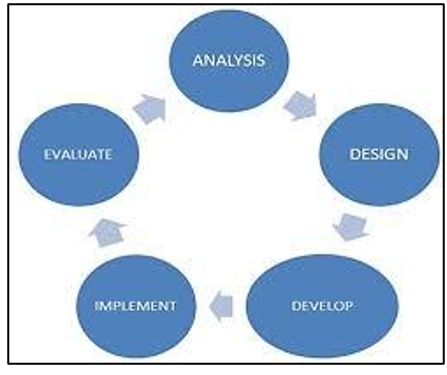
This study aimed to develop and evaluate West Java tourism-based numeracy teaching materials designed to foster critical thinking among elementary school students. The study employed a Research and Development approach using the ADDIE model, comprising analysis, design, development, implementation, and evaluation. Needs analysis involved curriculum review, interviews, and questionnaires administered in three elementary schools. The product was developed for fourth- and fifth-grade students and consisted of a numeracy module, student worksheets, and a teacher guide integrating measurement, estimation, arithmetic operations, and simple data analysis with authentic contexts from Kawah Putih, Tangkuban Perahu, and Pangandaran Beach. Product validity was assessed by three experts in mathematics education, curriculum, and elementary education, while practicality was examined through teacher and student response questionnaires. A limited field trial involving 75 students used pre-test and post-test tasks to assess numeracy and critical thinking, supported by classroom observations. The expert validation yielded an overall mean score of 3.55 on a four-point scale, indicating that the materials were very valid. Teacher and student responses ranged from 85% to 90%, placing the materials in the very practical category. Post-test performance increased by 25% compared with pre-test performance, indicating meaningful gains in students’ numeracy achievement after using the materials. Students also demonstrated stronger abilities to identify relevant information, analyze quantitative relationships, evaluate solution strategies, and draw logical conclusions in contextual tourism problems. These findings indicate that the developed materials are valid, practical, and potentially effective for meaningful numeracy learning. Broader trials are recommended to examine their effectiveness across diverse elementary school contexts.
Downloads
References
Blumenfeld, P. C., Soloway, E., Marx, R. W., & Krajcik, J. S. (1991). Motivating project-based learning: Sustaining the doing, supporting the learning. Educational Psychologist, 26(3–4), 369–398. https://doi.org/10.1080/00461520.1991.9653139
Boaler, J. (2016). Mathematical mindsets. Jossey-Bass.
Branch, R. M. (2020). Instructional design: The ADDIE approach. Springer. https://doi.org/10.1007/978-0-387-09506-6
Brown, R., Schmitt, M., & Peterson, S. (2020). Numeracy and mathematics in everyday contexts. Educational Studies in Mathematics, 104(2), 187–205.
Condliffe, B., Quint, J., Visher, M. G., Bangser, M. R., Drohojowska, S., Saco, L., & Nelson, E. (2017). Project-based learning: A literature review. MDRC.
Creswell, J. W., & Creswell, J. D. (2018). Research design: Qualitative, quantitative, and mixed methods approaches (5th ed.). Sage Publications.
Culture, M. of E. and. (2020). Emergency curriculum implementation guide: Literacy and numeracy. Directorate General of Early Childhood Education, Primary Education, and Secondary Education.
Darling-Hammond, L., Flook, L., Cook-Harvey, C., Barron, B., & Osher, D. (2020). Implications for educational practice of the science of learning and development. Applied Developmental Science, 24(2), 97–140. https://doi.org/10.1080/10888691.2018.1537791
Geiger, V., Goos, M., & Forgasz, H. (2015). A critical orientation to numeracy across the curriculum. ZDM Mathematics Education, 47(4), 611–623. https://doi.org/10.1007/s11858-014-0648-1
Hmelo-Silver, C. E. (2016). Problem-based learning: What and how do students learn? Educational Psychology Review, 28(1), 1–12. https://doi.org/10.1023/B:EDPR.0000034022.16470.F3
Kokotsaki, D., Menzies, V., & Wiggins, A. (2016). Project-based learning: A review of the literature. Improving Schools, 19(3), 267–277. https://doi.org/10.1177/1365480216659733
Kurniawati, T. (2020). Implementation of project-based learning to improve critical thinking skills of elementary school students. Journal of Basic Education, 12(1), 45–56.
Lithner, J. (2017). Principles for designing mathematical tasks that enhance imitative and creative thinking. ZDM Mathematics Education, 49(6), 937–949. https://doi.org/10.1007/s11858-017-0867-3
Ministry of Education, Culture, Research, and Technology. (2022). Kurikulum Merdeka: Panduan pembelajaran dan asesmen.
Moschkovich, J. (2018). Building on students’ mathematical thinking in context. Journal for Research in Mathematics Education, 49(2), 148–165.
NCTM. (2020). Catalyzing change in early childhood and elementary mathematics. National Council of Teachers of Mathematics.
OECD. (2019). OECD future of education and skills 2030. OECD Publishing.
OECD. (2020). PISA 2018 results: What students know and can do (Volume I). OECD Publishing. https://doi.org/10.1787/5f07c754-en
OECD. (2022). PISA 2022 mathematics framework. OECD Publishing. https://doi.org/10.1787/dfe0bf9c-en
Pang, J., & Kim, O. K. (2016). Supporting students’ mathematical modeling competencies. Educational Studies in Mathematics, 93(3), 293–312. https://doi.org/10.1007/s10649-016-9705-3
Rayanto, Y. H., Supriyo, & Sugianti. (2020). Applying objectivist instructional design of addie model on learning reading comprehension. Proceedings of the International Conference on Community Development (ICCD 2020), 795–799. https://doi.org/10.2991/assehr.k.201017.175
Richey, R. C., & Klein, J. D. (2020). Design and development research: Methods, strategies, and issues. Routledge. https://doi.org/10.4324/9780203826034
Sari, D., & Putra, Z. (2021). Contextual numeracy learning to improve elementary students’ critical thinking. Journal of Mathematics Education, 12(1), 55–68.
Schukajlow, S., Kaiser, G. & Stillman, G. Empirical research on teaching and learning of mathematical modelling: a survey on the current state-of-the-art. ZDM Mathematics Education 50, 5–18 (2018). https://doi.org/10.1007/s11858-018-0933-5
Setiawan, H. (2022). Local context-based teaching materials to improve learning effectiveness in elementary school. Journal of Primary Education Studies, 8(2), 115–128.
Setiawan, H., & Indrawati, R. (2021). Problem-based learning model to improve the critical thinking skills of elementary school students. Journal of Basic Education, 17(2), 211–228.
Stacey, K. (2015). The Real World and the Mathematical World. In: Stacey, K., Turner, R. (eds) Assessing Mathematical Literacy. Springer, Cham. https://doi.org/10.1007/978-3-319-10121-7_3
Steen, L. A. (2017). Numeracy: The new literacy for a data-drenched society. Routledge.
Stillman, G., Brown, J., & Galbraith, P. (2016). Research into mathematical applications and modeling. Springer. https://doi.org/10.1007/978-981-10-1419-2_14
Sullivan, P., Clarke, D., & Clarke, B. (2021). Teaching with challenging tasks. Journal of Mathematics Teacher Education, 24(2), 105–128. https://doi.org/10.1007/s10857-020-09491-7
Tout, D. (2020). Evolution of numeracy and quantitative literacy. Numeracy, 13(1), 1–15. https://doi.org/10.5038/1936-4660.13.1.1838
Tout, D., & Gal, I. (2015). Perspectives on numeracy: Reflections and challenges. ZDM Mathematics Education, 47(4), 691–702. https://doi.org/10.1007/s11858-015-0672-9
Widodo, A., & Kurniasih, F. (2021). The effectiveness of local context-based learning in improving the literacy and numeracy of elementary school students. Journal of Mathematics Education, 11(2), 134–145.
Wulandari, T. (2020). The effect of project-based teaching materials on the numeracy skills of elementary school students. Journal of Innovative Education, 14(3), 99–107.
Downloads
Published
How to Cite
Issue
Section
Citation Check
License
Copyright (c) 2026 Eka Firmansyah, Achmad Mudrikah, Siti Nurhayati, Feri Husada Susanto, Melinda Putri Mubarika

This work is licensed under a Creative Commons Attribution-ShareAlike 4.0 International License.
Authors who publish with this journal agree to the following terms:
- Authors retain copyright and grant the journal right of first publication with the work simultaneously licensed under a Creative Commons Attribution License that allows others to share the work with an acknowledgment of the work's authorship and initial publication in this journal.
- Authors are able to enter into separate, additional contractual arrangements for the non-exclusive distribution of the journal's published version of the work (e.g., post it to an institutional repository or publish it in a book), with an acknowledgment of its initial publication in this journal.
- Authors are permitted and encouraged to post their work online (e.g., in institutional repositories or on their website) prior to and during the submission process, as it can lead to productive exchanges, as well as earlier and greater citation of published work (See The Effect of Open Access).