From Arithmetic to Algebra: Students’ Epistemological Obstacles
DOI:
https://doi.org/10.35706/sjme.v9i2.205Kata Kunci:
Learning obstacle, hambatan epistemologi, variabelAbstrak
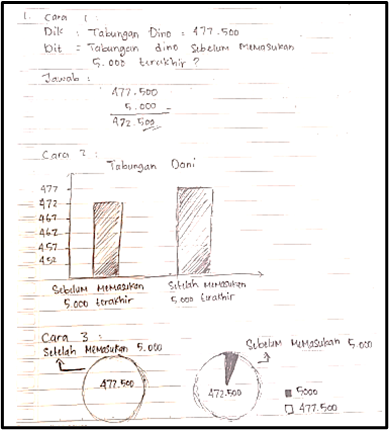
The initial algebraic concept typically introduced to students is the linear equation in one variable. One of the earliest difficulties students encounter with this concept is comprehending the significance of a variable. This study aims to investigate the epistemological obstacles faced by students in acquiring proficiency in linear equations in one variable. A qualitative phenomenological methodology was employed in this research. The participants consisted of 35 eighth-grade students enrolled in a junior high school who had previously studied linear equations in one variable. In the initial phase of the study, the researcher formulated two word problems. The utilization of word problems was intended to elucidate students’ thought processes in articulating their ideas or reasoning in written form. Subsequently, interviews were conducted with four selected students to corroborate the researcher’s interpretation of their written responses. The findings and discussion reveal that the conceptual deficiencies acquired during instruction contributed to the emergence of epistemological learning obstacles among students. This learning obstacle was identified through the solutions proposed by students, which were predominantly arithmetic rather than algebraic. Although the students acknowledged that the problem they were dealing with was related to the concept of linear equations in one variable, the majority still encountered difficulties in providing solutions in the form of a linear equation in one variable., particularly in the forms and .
Unduhan
Referensi
Alsaeed, M. S. (2017). Using The Internet In Teaching Algebra To Middle School Students: A Study Of Teacher Perspectives And Attitudes. Contemporary Issues in Education Research (CIER), 10(2), 121–136. https://doi.org/10.19030/cier.v10i2.9923
Brousseau, G. (2002). Theory of Didactical Situations in Mathematics. In Theory of Didactical Situations in Mathematics. https://doi.org/10.1007/0-306-47211-2
Creswell, J. W. (2012). Educational research : Planning, conducting, and evaluating quantitative and qualitative research.
Dahlan, J. A., & Juandi, D. (2011). Analisis Representasi Matematik Siswa Sekolah Dasar Dalam Penyelesaian Masalah Matematika Kontekstual. Jurnal Pengajaran MIPA, 16, 128–138.
Hall, R. D. G. (2002). An Analysis of Errors Made in the Solution of Simple Linear Equations. 1–64.
Herscovics, N., & Linchevski, L. (1994). A Cognitive Gap Between Arithmetic and Algebra. Educational Studies in Mathematics, 27(1), 59–78. https://doi.org/10.1007/bf01284528
Jupri, A., Drijvers, P., & Heuvel–Panhuizen, M. van den. (2014). Student Difficulties in Solving Equations From an Operational and a Structural Perspective. International Electronic Journal of Mathematics Education, 9(1), 39–55. https://doi.org/10.29333/iejme/280
Kieran, C., Pang, J., Schifter, D., & Ng, S. F. (2016). Early Algebra Research into its Nature, its Learning, its Teaching. In Springer Nature. https://doi.org/10.1007/978-3-319-32258-2
Lucariello, J., Tine, M., & Ganley, C. M. (2014). A Formative Assessment of Students’ Algebraic Variable Misconceptions. The Journal of Mathematical Behavior, 33, 30–41. https://doi.org/10.1016/j.jmathb.2013.09.001
Lundberg, A. L. V., & Kilhamn, C. (2018). Transposition of Knowledge: Encountering Proportionality in an Algebra Task. International Journal of Science and Mathematics Education, 16(3), 559–579. https://doi.org/10.1007/s10763-016-9781-3
Maudy, S. Y., Suryadi, D., & Mulyana, E. (2017). Contextualizing symbol, symbolizing context. AIP Conference Proceedings, 1868(August). https://doi.org/10.1063/1.4995156
Miles, B. M., & Huberman, A. M. (1994). Qualitative data analysis: An expanded sourcebook. In Sage.
Radford, L. (2022). Introducing Equations in Early Algebra. ZDM, 1–24.
Sarımanoğlu, N. U. (2019). The Investigation of Middle School Students ’ Misconceptions about Algebraic Equations *. Studies in Educational Research and Development, 3(1), 1–20.
Sfard, A., & Linchevski, L. (1994). The Gains and the Pitfalls of Reification — The Case of Algebra. Learning Mathematics, 3, 87–124. https://doi.org/10.1007/978-94-017-2057-1_4
Sidik, G. S., Suryadi, D., & Turmudi, T. (2021). Learning Obstacle on Addition and Subtraction of Primary School Students: Analysis of Algebraic Thinking. Education Research International, 2021. https://doi.org/10.1155/2021/5935179
Skemp, R. R. (2020). Relational Understanding and Instrumental Understanding. The Arithmetic Teacher, 26(3), 9–15. https://doi.org/10.5951/at.26.3.0009
Stacey, K., & MacGregor, M. (1997). Students’ understanding of algebraic notation: 11–15. Educational Studies in Mathematics, 33(February 1997), 1–19.
Suryadi, D. (2019). Landasan Filosofis: Penelitian Desain Didaktis (DDR). Pusat Pengembangan DDR Indonesia.
Suryadi, D., Itoh, T., & Isnarto. (2023). A prospective mathematics teacher’s lesson planning: An in-depth analysis from the anthropological theory of the didactic. Journal on Mathematics Education, 14(4), 723–739. https://doi.org/10.22342/jme.v14i4.pp723-740
Tall, D. (1992). Mathematical processes and symbols in the mind. Symbolic Computation in Undergraduate Mathematics, 1–21.
van Amerom, B. (2002). Reinvention of early algebra. In Developmental research on the transition from arithmetic to algebra.
Wahyuni, R., Herman, T., & Fatimah, S. (2023). Letters in Algebra as the Transition from Arithmetic Thinking to Algebraic Thinking. Mosharafa: Jurnal Pendidikan Matematika, 12(3), 441–452. https://doi.org/10.31980/mosharafa.v12i3.2369
Yıldız, P., & Yetkin Özdemir, E. (2021). Teacher subject matter knowledge for the meaningful transition from arithmetic to algebra. Journal of Pedagogical Research, 5(4), 172–188. https://doi.org/10.33902/JPR.2021474587
Zielinski, S. F. (2017). From No to Yes : The Impact of an Intervention on the Persistence of Algebraic Misconceptions Among Secondary School Algebra Students. https://doi.org/10.17760/d20270105
Unduhan
Diterbitkan
Cara Mengutip
Terbitan
Bagian
Citation Check
Lisensi
Hak Cipta (c) 2025 Redo Martila Ruli, Dadang Juandi, Jarnawi Afgani Dahlan, Septiani Yugni Maudy

Artikel ini berlisensiCreative Commons Attribution-ShareAlike 4.0 International License.
Hak cipta dilindingi undang-undang berdasarkan Undang-undang Nomor 28 Tahun 2014 tentang Hak Cipta. Dilarang memperbanyak isi jurnal ini, baik sebagian maupun seluruhnya dalam bentuk apapun tanpa izin tertulis dari SJME (Supremum Journal of Mathematics Education) sebagai pemegang Hak Cipta terhadap seluruh isi dari jurnal tersebut.
Penulis yang menerbitkan jurnal ini setuju dengan persyaratan berikut:
- Penulis mempertahankan hak cipta dan memberikan hak jurnal tentang publikasi pertama dengan karya yang secara bersamaan dilisensikan di bawah Lisensi Atribusi Creative Commons yang memungkinkan orang lain membagikan karya tersebut dengan pengakuan dari karya penulis dan publikasi awal dalam jurnal ini.
- Penulis dapat memasukkan pengaturan kontrak tambahan yang terpisah untuk distribusi non-eksklusif dari versi terbitan jurnal tersebut (misalnya, kirimkan ke repositori institusional atau publikasikan dalam sebuah buku), dengan sebuah pengakuan atas publikasi awalnya di Jurnal ini.
- Penulis diizinkan dan didorong untuk memposting pekerjaan mereka secara online (misalnya di repositori institusional atau di situs web mereka) sebelum dan selama proses penyampaian, karena dapat menyebabkan pertukaran yang produktif, serta kutipan karya yang diterbitkan sebelumnya dan yang lebih lama.